
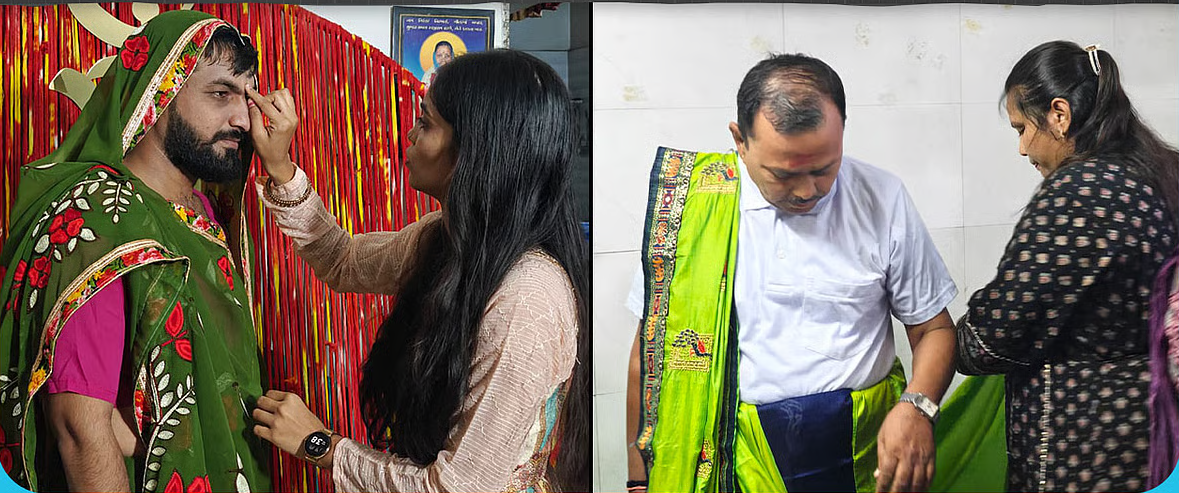
Men in Sarees Dance: In the heart of Ahmedabad’s old city lies a narrow, winding street called Sadu Mata Ni Pol, where every year on the eighth night of Navratri, a remarkable ritual unfolds. Men from the Barot community dress in sarees and perform Garba, not merely as entertainment, but as an act of atonement, remembrance, and respect rooted in a tragic tale of betrayal. This ritual is known locally as Saduma na Garba, and it has persisted for more than 200 years, keeping alive a legend, a curse, and a spirit of humility.
The Temple and the Locale: Sadu Mata Ni Pol
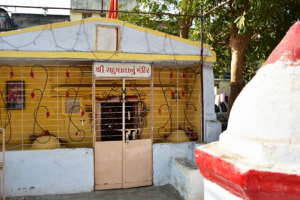
Sadu Mata Ni Pol is an old pol (a traditional residential cluster in Ahmedabad) known for its heritage homes and tight lanes. The area is densely populated and steeped in local traditions. Central to this ritual is a small temple dedicated to Sadu Mata (or Saduben), the woman whose sacrifice and curse are said to have given birth to the custom. Every Ashtami (eighth night) of Navratri, this temple becomes a focal point, where men gather to perform the dance of repentance.
The Story Behind the Curse
According to local oral legends, over 200 years ago there lived a woman named Saduben from the Barot community in Sadu Mata Ni Pol. She was confronted with a harrowing situation: a Mughal nobleman desired her as his courtesan (concubine). She appealed to the men of her community for protection. But none intervened. The tragedy deepened when she lost her child. Devastated, Saduben pronounced a curse on the men of Barot — that their descendants would be “cowards,” bereft of bravery — before committing sati (ending her own life) as Per the legend.
Saduben’s spirit came to be reverenced as Sadu Mata, worshipped in local memory. To appease her, to lift the alleged curse, and to honor her sacrifice, the community instituted this ritual: on Navratri’s eighth night, the men perform Garba dressed as women. The dressing in sarees is symbolic — a gesture of humility, remorse, and respect.
The Ritual: What Happens and How
This is not like the large, festive Garbas full of glamour. Saduma na Garba is simple, solemn, yet deeply meaningful. Men from the Barot community don sarees (helped by women), walk the narrow lanes, often at night, and gather at the Sadu Mata temple. The attire is saree over regular clothes; petticoats and drapes are adjusted carefully. They perform Sheri Garba (folk Garba danced in local lanes) around the temple precincts. The dance is not just for dance’s sake — it’s penance, prayer, and a way to remember Saduben’s loss.
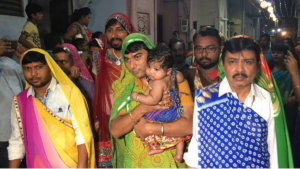
Many participants say they do this ritual to seek Saduben’s blessings, asking for things like good health, children, prosperity, or simply to express gratitude because in past years their prayers seem to have been heard. Others see it as fulfilling obligation to tradition, preserving local history, and keeping alive a story that binds their identity.
How This Ritual Protects, Remembers, and Heals
While some might dismiss this as superstition, for many in Sadu Mata Ni Pol and beyond it has genuine emotional and cultural significance:
- Cultural Memory: It keeps alive an oral history — Saduben’s story, the betrayal, the loss, the curse. Without such rituals, stories fade.
- Community Identity & Humility: It’s a ritual of humility — men dressing in sarees, something not traditionally done in public male roles, shows contrition and break from ego.
- Spiritual & Emotional Relief: For many, it’s cathartic. They come with their prayers, with hopes, sometimes with long-held wishes. The ritual is a moment to express faith, show remorse, or seek blessings.
- Moral Lesson: The story underlines the importance of defending the vulnerable and acting with courage, especially when someone needs help. It’s a cautionary tale handed down generations to remind people of moral responsibility.
Reactions, Social Media, and Modern Relevance
Recently, the ritual has gained wider visibility through viral social media videos (for example, from “Awesome Amdavad”), showing men dancing in sarees in Sadu Mata Ni Pol. These reels have sparked diverse reactions: admiration for preserving heritage, curiosity about the meaning, and some debate on gender norms.
Some view it as challenging standard gender expressions, others as a purely ceremonial gesture. Regardless, many agree it’s a powerful reminder of tradition, respect, and remembering those wronged.
Conclusion
The Saduma na Garba ritual is far more than an interesting tradition. It’s a lived link between past and present — a testament to how communities carry their wounds, their regrets, their hopes across centuries. In Sadu Mata Ni Pol, men in sarees dance not for spectacle, but for penance, for remembrance, for healing.
In a fast-moving, modern world, it asks us to reflect: Are we mindful of the stories, the sacrifices, the moral debts of our past? Do we act with courage when someone cries for help? And do we preserve traditions — no matter how unusual they seem — that carry lessons about dignity, empathy, and respect?
So this Navratri, when you see those saree-clad men performing Sheri Garba in Sadu Mata Ni Pol, remember: beneath the swirling drapes and rhythmic music lies a story of sorrow, courage, and belief — and a reminder that some traditions live, not for pride, but for humility.
📢 Stay tuned to our blog for daily updates across India! Bookmark this page to get the latest rates every day.
And also visit our page for latest news : https://5pmnews.com
and our YouTube Channel for more informative video this Ritual : https://www.youtube.com/@5PMNewsgyan
Also Watch Visit us on Instagram Channel for more informative reel on this Ritual: https://www.instagram.com/
For any Law related information do visit our page : https://lawyersgyan.com/