
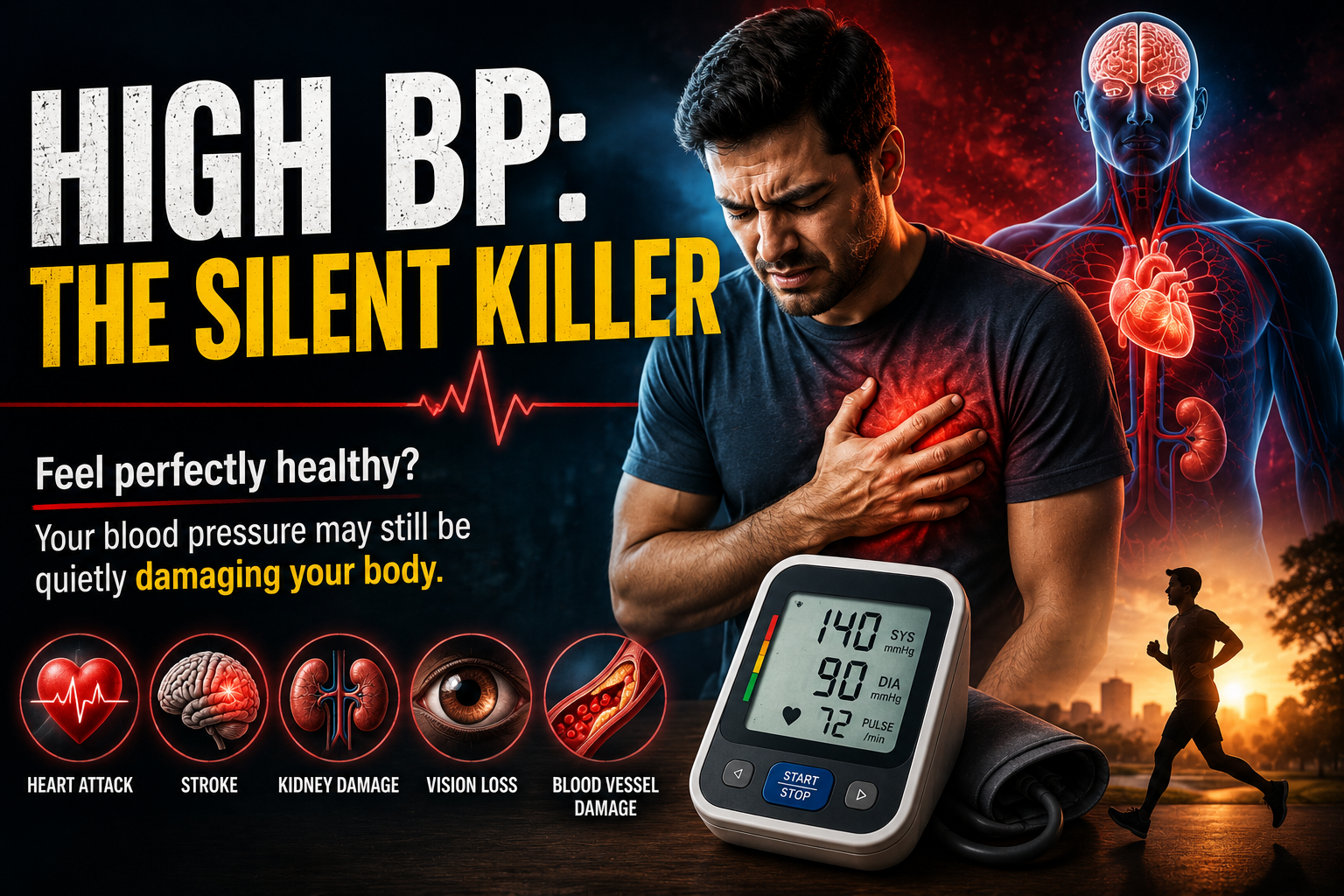
You Can Feel Completely Fine—and Still Have High Blood Pressure
You wake up, go to work, eat normally, exercise occasionally and feel perfectly healthy.
No pain.
No obvious weakness.
No major warning.
So you might assume everything is fine.
But there is one number you may not know: your blood pressure.
High blood pressure, or hypertension, is often called the “silent killer” because many people have no noticeable symptoms even when their blood pressure remains dangerously high. The only reliable way to know whether your blood pressure is elevated is to measure it.
And this isn’t a rare problem.
The World Health Organization estimates that around 1.4 billion adults aged 30–79 worldwide had hypertension in 2024, with about 44% unaware that they had it.
In India, WHO estimates approximately 220 million people are living with hypertension, while only around 12% have their blood pressure under control.
That’s why knowing your BP isn’t just a health habit.
It can be a potentially life-saving one.
🩸 What Exactly Is Blood Pressure?
Every time your heart beats, it pushes blood through your arteries.
That creates pressure against the walls of your blood vessels.
Your blood-pressure reading has two numbers:
🔺 Systolic pressure
The upper number represents the pressure when your heart contracts and pumps blood.
🔻 Diastolic pressure
The lower number represents the pressure when your heart relaxes between beats.
So when someone says their BP is 120/80, the first number is systolic pressure and the second is diastolic pressure.
But here’s the important part:
One unusual reading doesn’t automatically mean you have hypertension.
Blood pressure can vary, which is why repeated measurements and proper medical assessment are important.
WHO’s India guidance defines hypertension as readings of 140/90 mmHg or higher when measured on two different days.
Different professional guidelines can use different thresholds for defining and treating hypertension, so people shouldn’t diagnose themselves from a single reading or from an internet chart.
🤫 Why Is It Called the “Silent Killer”?
This is the most important part of the story.
Many people with hypertension don’t feel any different.
There may be no obvious pain telling you:
“Your blood pressure is too high.”
WHO notes that many people with hypertension are unaware that they have the condition.
That’s why waiting for symptoms isn’t a good strategy.
You could be thinking:
“I feel completely normal.”
Meanwhile, persistently elevated blood pressure can gradually damage blood vessels and place extra strain on important organs.
❤️ What Can Uncontrolled High BP Do to Your Body?
Hypertension isn’t just about a number on a BP machine.
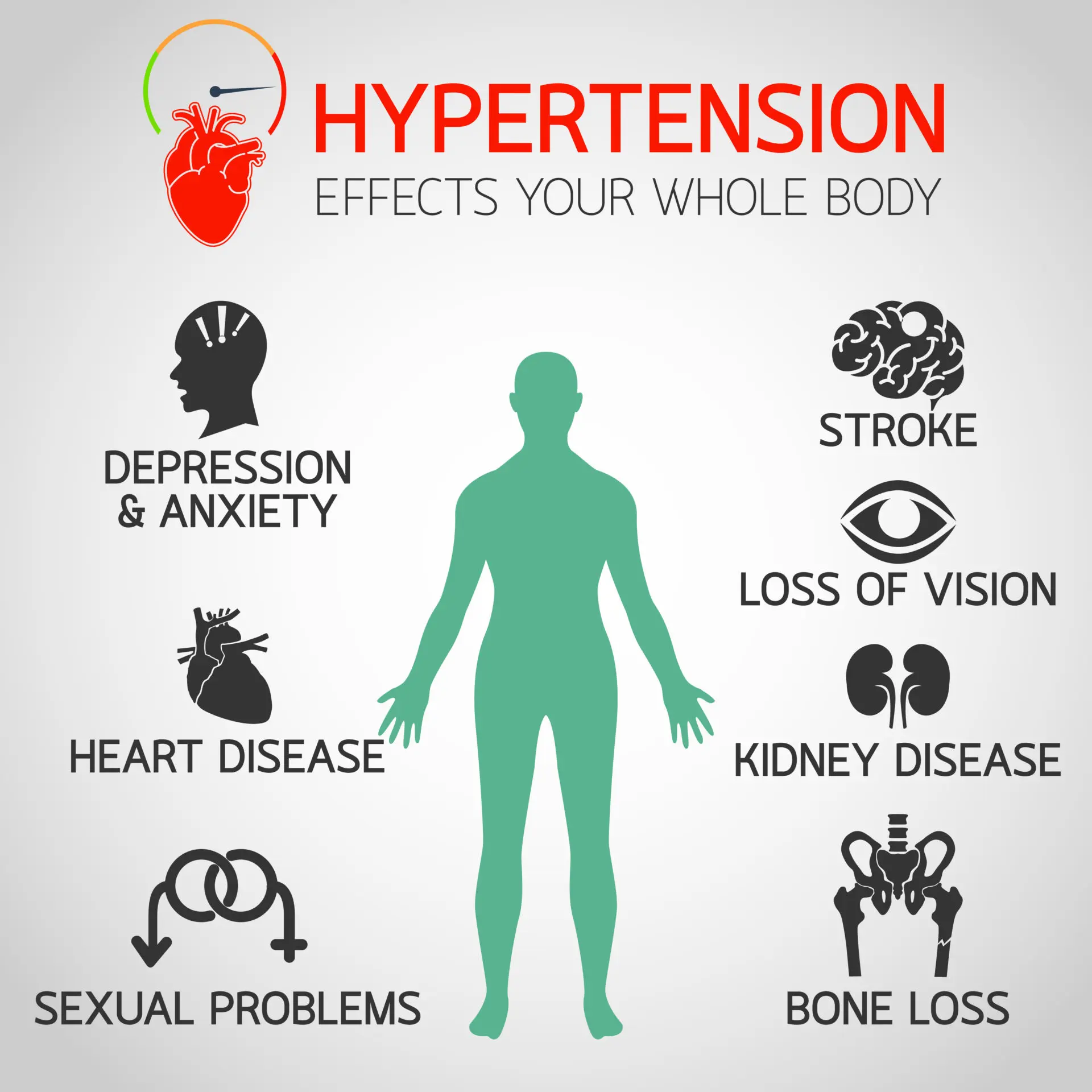
Over time, uncontrolled high blood pressure can increase the risk of serious problems involving the:
❤️ Heart
It can contribute to heart disease, heart attacks, heart failure and other cardiovascular problems.
🧠 Brain
High blood pressure is a major risk factor for stroke.
🫘 Kidneys
Long-term hypertension can damage the kidneys and contribute to kidney disease or kidney failure.
👁️ Eyes
Damage to blood vessels can also affect vision.
🩸 Blood vessels
Persistently high pressure can damage and stiffen arteries.
And that’s what makes hypertension so dangerous:
The damage can develop quietly.
🇮🇳 Why Should Indians Pay Special Attention?
India is facing a significant hypertension burden.
WHO’s India data estimates approximately 220 million people in the country are living with hypertension, while only about 12% have it controlled.
That means awareness and regular measurement are extremely important.
India has also been running the India Hypertension Control Initiative (IHCI) since 2017, involving the Ministry of Health and Family Welfare, ICMR, WHO India and state governments to improve detection and treatment of hypertension.
So this isn’t simply an individual health issue.
It is also a major public-health challenge.
⚠️ Who Is More Likely to Develop High Blood Pressure?
Some risk factors cannot be changed.
These include:
- Increasing age
- Family history/genetics
- Certain medical conditions
But several important risk factors can be modified.
These include:
🧂 High salt intake
🏃 Physical inactivity
⚖️ Overweight or obesity
🚬 Tobacco use
🍺 Excessive alcohol consumption
🥗 Unhealthy diet
WHO also identifies conditions such as diabetes and kidney disease as important associated risks.
This doesn’t mean that someone with these factors definitely has hypertension.
It means they have more reason to pay attention to their blood pressure.
🧂 Is Salt Really That Important?
Yes.
Excessive dietary salt is an established modifiable risk factor for hypertension.
WHO recommends reducing salt intake as part of preventing and managing high blood pressure.
And this is particularly relevant in everyday Indian diets, where sodium can come not only from the salt shaker but also from processed foods, packaged snacks, sauces, pickles and other foods.
The lesson isn’t:
“Never eat salt again.”
It’s:
Be aware of how much sodium you’re consuming.
🏃 Can Lifestyle Changes Actually Help?
Yes.
Lifestyle changes can help prevent hypertension and can lower blood pressure in people who already have it.
Important steps include:
🥗 Eat a healthier diet
Emphasise vegetables, fruits and other nutritious foods while reducing excessive salt and unhealthy fats.
🏃 Stay physically active
Regular physical activity can support healthy blood pressure.
⚖️ Maintain a healthy weight
If someone is overweight, losing weight can help reduce blood pressure.
🚭 Don’t smoke
Tobacco damages the cardiovascular system and increases health risks.
🍺 Limit alcohol
Excessive alcohol consumption can contribute to high blood pressure.
WHO recommends these types of lifestyle changes as part of hypertension prevention and management.
💊 Does Everyone With High BP Need Medicine?
Not necessarily in exactly the same way.
Treatment depends on factors including:
- Blood-pressure levels
- Overall cardiovascular risk
- Other medical conditions
- Age and individual circumstances
- Response to lifestyle changes
Some people may need medication, while others may initially be advised to make lifestyle changes and monitor their BP.
The important point is:
Don’t start, stop or change BP medication without discussing it with a healthcare professional.
For people who do need treatment, prescribed medicines can be an important part of controlling blood pressure and reducing complications.
📱 Can You Check Your BP at Home?
Yes.
Home blood-pressure monitoring can be useful, particularly for people who have hypertension or have been advised by their healthcare professional to monitor their readings.
The American Heart Association recommends a validated automatic upper-arm cuff monitor rather than relying on wrist or finger devices for routine home measurement.
For a more accurate reading, the AHA recommends:
- Avoid smoking, exercise and caffeinated drinks for about 30 minutes beforehand.
- Empty your bladder.
- Sit quietly for around five minutes.
- Keep your back supported.
- Keep both feet flat on the floor.
- Rest your arm at heart level.
- Don’t talk during the measurement.
- Take readings consistently and record them.
This is important because poor measurement technique can produce misleading readings.
🚨 What If Your BP Is Extremely High?
Very high blood pressure can be an emergency, particularly when accompanied by concerning symptoms.
The American Heart Association identifies blood pressure above 180/120 mmHg as a hypertensive crisis threshold.
If a reading is that high, don’t simply ignore it or assume you’ll feel something.
If it remains extremely high, seek urgent medical advice. If it is accompanied by symptoms such as chest pain, difficulty breathing, weakness/numbness, vision changes, difficulty speaking or other signs of a medical emergency, seek emergency medical care immediately.
🧠 The Biggest Myth: “If I Had High BP, I’d Know”
No.
That’s exactly the problem.
High blood pressure often doesn’t produce noticeable symptoms.
Headaches or other symptoms can occur, but they aren’t reliable ways to determine whether someone has hypertension.
So don’t use:
“I don’t have a headache.”
as proof that your BP is normal.
Use:
“I checked my blood pressure.”
🩺 How Often Should You Check It?
There isn’t one universal schedule for everyone.
Your age, health history, previous readings and risk factors all matter.
The American Heart Association says adults with normal blood pressure should generally have it checked regularly, while people with high blood pressure may need home monitoring as part of their management plan.
If you’ve never checked your blood pressure—or can’t remember the last time you did—consider making it part of your next routine health check.
❤️ The Good News: High BP Can Be Managed
“Silent killer” sounds frightening.
But there’s an important second half to the story:
Hypertension is preventable and treatable.
WHO says reducing modifiable risk factors, regularly checking blood pressure, following medical advice and using treatment when needed can help manage hypertension and reduce complications.
So the goal isn’t to become scared of your BP number.
The goal is to know it, understand it and manage it if necessary.
🏁 Final Takeaway
High blood pressure doesn’t always announce itself.
There may be no dramatic warning.
No obvious pain.
No feeling that something is wrong.
That’s precisely why checking your blood pressure matters.
A few minutes with a properly used BP monitor can tell you something that your body may not.
🩺 Don’t wait for symptoms to know your numbers.
And if your readings are repeatedly high, don’t self-diagnose or panic—talk to a qualified healthcare professional.
Your blood pressure is only a number.
What you do with that information can make a very big difference.
❓ FAQs
Is high blood pressure always accompanied by symptoms?
No. Many people with hypertension have no noticeable symptoms, which is why regular measurement is important.
What do the two BP numbers mean?
The upper number is systolic pressure, measured when the heart contracts. The lower number is diastolic pressure, measured when the heart relaxes between beats.
Can lifestyle changes lower blood pressure?
Yes. Healthier eating, reducing excessive salt, physical activity, maintaining a healthy weight, avoiding tobacco and limiting alcohol can help. Some people will still need medication.
Can I measure my BP at home?
Yes. Home monitoring can be useful when performed correctly with a validated device, particularly for people managing hypertension.
Is one high BP reading enough to diagnose hypertension?
Not necessarily. Blood pressure varies, and diagnosis generally relies on repeated measurements and appropriate clinical assessment. WHO’s India guidance uses readings on two different days for its diagnostic definition.
📖 Related Reading
➡️ Will AI Replace Jobs? The Truth About Artificial Intelligence and the Future of Work
➡️🏛️ How Does Parliament Pass a Law? A Step-by-Step Guide
➡️ 🛡️ Digital Suraksha – Episode #01: UPI Safety Tips Every User Should Know
➡️ 💰 Why Is Everything Getting Expensive Again?
➡️ ✈️ IndiGo Employee Allegations Explained: What Actually Happened?
➡️ Top 10 News Headlines – 17 July 2026
📢 Stay tuned to our blog for daily updates across India! Bookmark this page to get the latest rates every day.
And also visit our page for latest news : https://5pmnews.com
and our YouTube Channel for more informative video this Ritual : https://www.youtube.com/@5PMNewsgyan
Also Watch Visit us on Instagram Channel for more informative reel on this Ritual: https://www.instagram.com/
For any Law related information do visit our page : https://lawyersgyan.com/